




1963 Dime Value: The Problem With Bright but Overcleaned Coins
The 1963 dime value is not always as easy to read as it seems. A bright silver coin can look strong and still be a poor buy. That is one of the main traps with this date. Many 1963 dimes survive with decent detail, but surface quality changes the market fast.
Buyers who focus only on shine often miss the real problem. A quick free coin value lookup may show a number, but it will not tell you whether the coin still has original luster or has already been overcleaned.
Quick Overview of the 1963 Dime
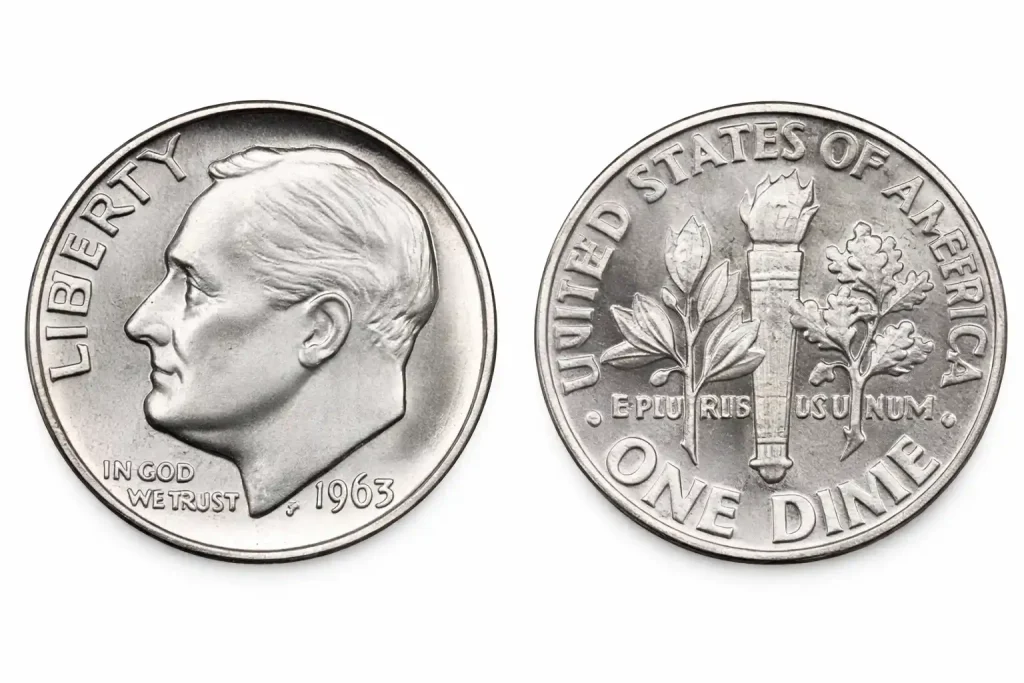
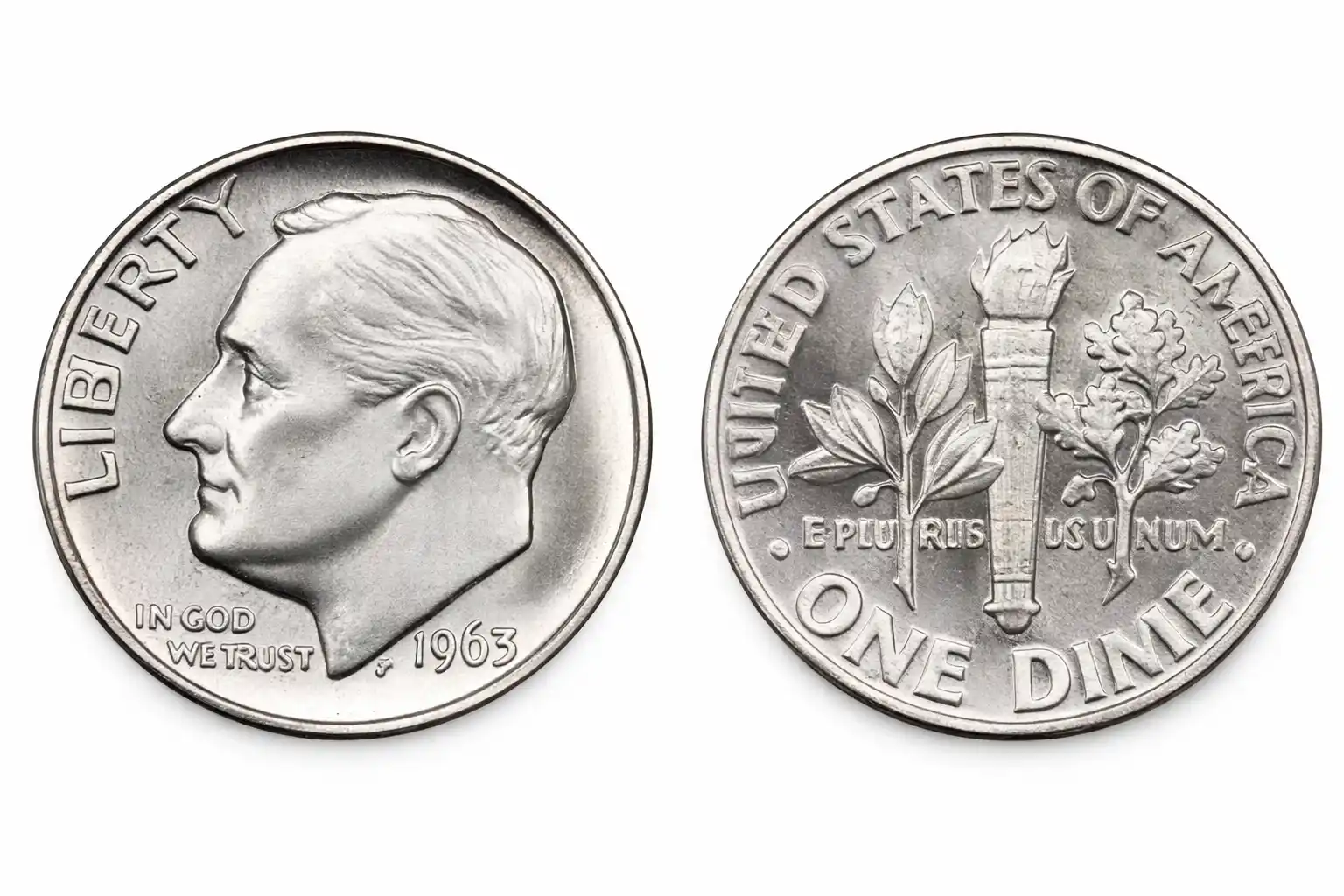
The 1963 dime is not a rare date by itself. The Philadelphia business strike had a mintage of 123,650,000. Denver produced 421,476,530. The proof issue reached 3,075,645 pieces. All three used the same 90% silver, 10% copper alloy, with a weight of 2.50 grams and a diameter of 17.90 mm.
| Issue | Mint mark | Type | What collectors check first |
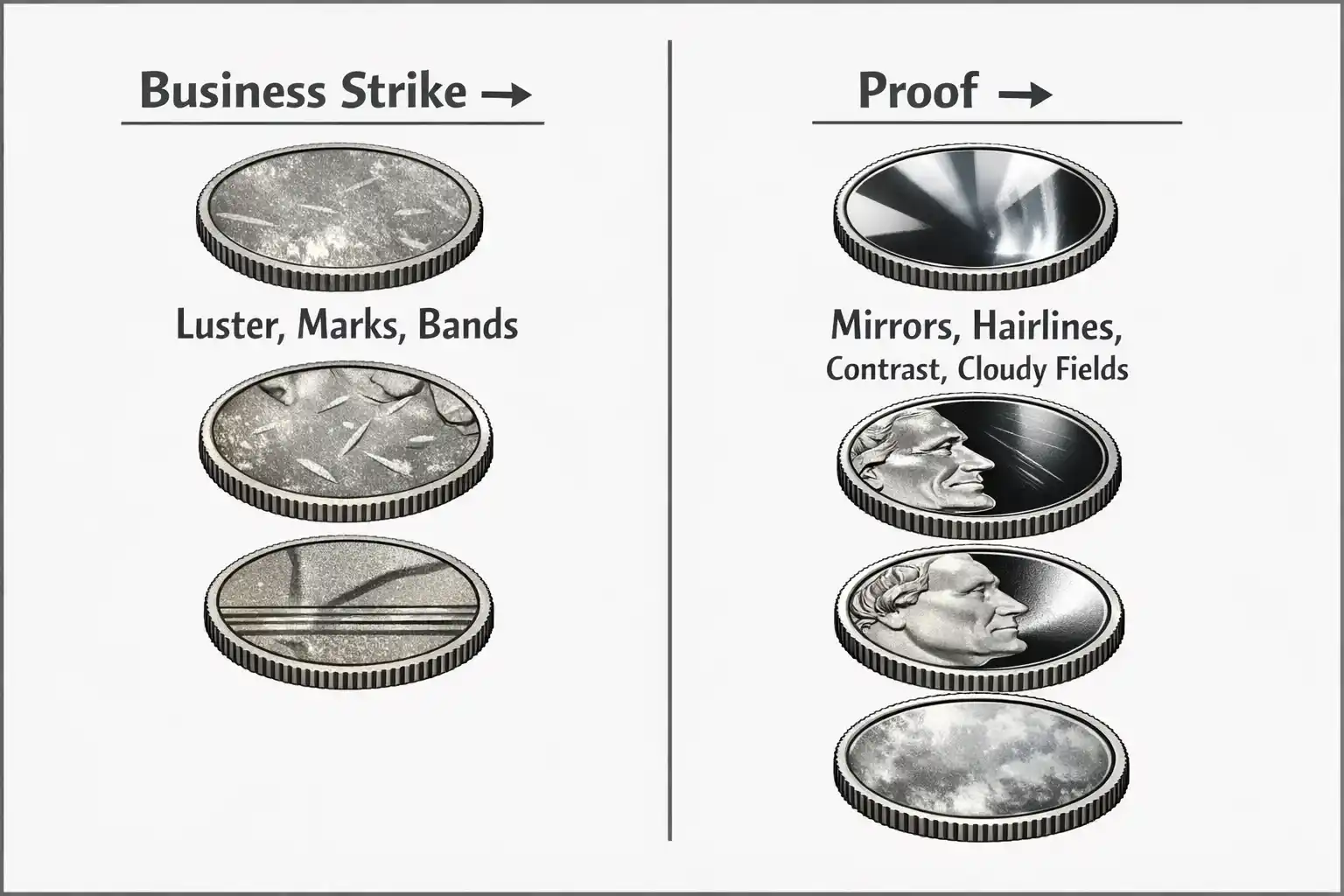
| 1963 | None | Business strike | Luster, marks, bands |
| 1963-D | D | Business strike | Strike, luster, bands |
| 1963 Proof | None | Proof | Mirrors, hairlines, contrast |
This matters because the same date can sit in different markets. A normal business strike from circulation is one thing. A proof with strong mirrors is another. A Mint State coin with Full Bands is another again. The date stays the same. The surface does not.
Why Brightness Can Mislead
A bright silver coin often looks attractive to new collectors. It feels fresh. It feels clean. It can even feel safer to buy. That reaction is understandable. It is also risky.
Natural silver luster is not the same as forced brightness. A dime can be bright because it stayed original and well-preserved. It can also be bright because someone wiped, dipped, or cleaned it too hard. The second coin often loses collector trust. That is the real problem. The coin still has detail. It still has silver. It may even show strong bands. Yet the market often reads it as damaged or altered in a subtle but important way.
This is why bright coins need slower viewing, not faster buying.
Original Luster Versus Overcleaned Shine
Original luster usually has movement. Under light, it rolls across the surface. It does not look flat. It does not look dead. It does not turn the whole coin into one cold white tone.
Overcleaned silver often looks different. The surface can seem too pale. The fields may look rubbed. The shine may feel harsh rather than natural. On some coins, thin hairlines run through the fields. On others, the coin looks washed out. The design still stands there, but the surface no longer has the right life.
A practical split looks like this:
- Original luster shows flow
- Cleaned shine often looks flat
- Hairlines raise concern fast
- Washed surfaces lose depth
- Harsh brightness lowers trust
That last point matters more than many buyers expect. Collectors do not pay only for detail. They pay for originality, stability, and a surface that still looks right.
Where to Look First on a 1963 Dime
You do not need advanced tools to spot many problem coins. You need a good light, a slow look, and the right order.
Start with the open fields. Then move to Roosevelt’s face. After that, turn to the reverse torch and the horizontal bands. Those areas reveal most of the story.
| Area | What to watch for |
| Fields | Hairlines, wiped look, flat shine |
| Roosevelt’s face | Marks, dullness, unnatural brightness |
| Torch | Strike strength, sharpness |
| Bands | Separation, softness, disturbance |
The fields matter because cleaning marks show there first. Roosevelt’s cheek and jaw matter because contact marks and overbright surfaces stand out there quickly. The torch matters because strike quality still shapes the grade. The bands matter because strong separation can bring extra demand, but only when the rest of the coin supports it.
How Cleaning Changes the Grading Conversation
Cleaning does not always erase detail. That is why it fools people. A 1963 dime can still show strong design elements after cleaning. It can still look sharp in a photo. It can still look bright in a dealer’s case.
The problem is that grade is not built from detail alone. Surface quality matters. Originality matters. A coin with disturbed fields and unnatural brightness may no longer fit the quality level that the sharp detail seems to suggest. This is where the value gap opens.
Two 1963 dimes may have similar wear levels. One still has a natural surface. The other has been stripped of that look. They will not attract the same buyer interest. They will not carry the same confidence. They will not move the same way in the market.
That difference becomes more important in Mint State and near-Mint State coins. Once the date itself is common, the surface becomes the real filter.
Full Bands Do Not Rescue a Bad Surface
On Roosevelt dimes, Full Bands are a major technical detail. PCGS uses the FB designation for regular strikes when the horizontal bands on the torch show full separation. The lower and upper bands matter because they show strike precision and sharpness.
That said, strong bands do not fix a cleaned coin.
This is where some collectors overrate one feature. They see sharp bands and stop there. The better approach is broader. Full Bands help when the coin also has sound luster, clean fields, and a more natural look. If the surface is overcleaned, the strike detail still cannot fully carry the coin.
A practical way to think about it:
- Full Bands improve a strong coin
- Full Bands do not erase hairlines
- Full Bands do not restore originality
- Full Bands matter most with better surfaces
That is why a flashy coin with decent bands can still be a weak buy.
Proof Coins Need a Different Reading
The 1963 proof dime belongs to a different category. It was struck for collectors, not for circulation, and the mintage was 3,075,645. Proofs should show mirrors and sharper presentation by design.
This changes the reading. A bright proof is normal. A bright business strike is not automatically normal. On a proof coin, the key problems are different:
- Cloudy mirrors
- Hairlines in the fields
- Weak contrast
- Mishandling after the issue
GreatCollections records many 1963 proof DCAM sales across grades from 65 to 69, which shows that proof surfaces remain an active collector market for this date.
So the article’s main warning applies most strongly to business strikes, especially raw silver dimes that look a little too white and a little too smooth.
Common Buying Mistakes With Bright 1963 Dimes
This date invites quick decisions. The coin is silver. It is familiar. It often appears in mixed lots. That combination leads to repeated mistakes.
The most common ones are simple:
- Brightness mistaken for originality
- Hairlines ignored
- Photos are trusted too quickly
- Silver content is treated as the whole story
- Strong bands overrated on weak surfaces
Online listings make this worse. A bright photo can hide flat texture. A soft image can hide hairlines. A seller may not even be trying to mislead. The coin can still look better on screen than in hand.
That is why comparison matters. Do not compare one bright dime to one price figure. Compare it to other 1963 dimes with natural surfaces, similar grade range, and similar strike quality.
FAQ
Is a bright 1963 dime always a good sign?
No. Brightness can come from original luster or from cleaning. The coin needs a slower surface check before the look can be trusted.
Can a cleaned 1963 dime still have silver value?
Yes. It still carries its silver content because all 1963 dimes were struck in a 90% silver alloy. But numismatic demand often weakens when the surface looks altered.
Do Full Bands make a cleaned dime premium?
Not by themselves. Full Bands help when the surface is also strong. A cleaned coin can still fall short even with decent band detail.
Can a coin identifier app free detect a cleaned coin?
Not reliably. A cleaned surface is a visual judgment, not just an identification task, but the app can also be helpful. For example, the Coin ID Scanner is still useful in a different way. Its AI assistant can narrow the issue fast, smart filters help separate pieces, and collection management makes it easier to organize several close-looking silver pieces in one group. That helps with sorting and comparison. The final call on cleaning still has to come from the surface itself
Final Take
The 1963 Roosevelt dime is common as a date. That is exactly why surface quality matters so much. A bright coin is not always a better coin. In this series, overcleaned silver can look strong for a moment and weak after a closer look.
The better rule is simple. Trust movement in the luster, not just brightness. Trust the fields, not just the shine. On a 1963 dime, that is where the real value story begins.